
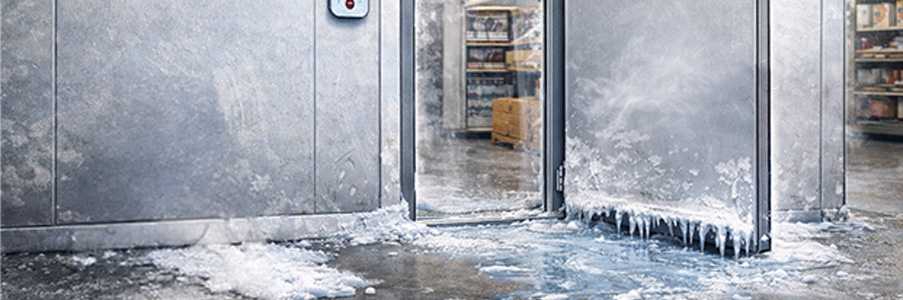
If you’re seeing frost on the floor, ice building up at the door, or a slick patch forming near the entrance of your walk-in cooler or freezer, it’s not just annoying — it’s a warning sign.
Ice almost always shows up for one reason:
Warm, humid air is getting into a cold space… and that moisture is freezing.
The good news? The location of the ice usually points to what’s causing it — and many fixes are simple.
Why Ice Happens in the First Place
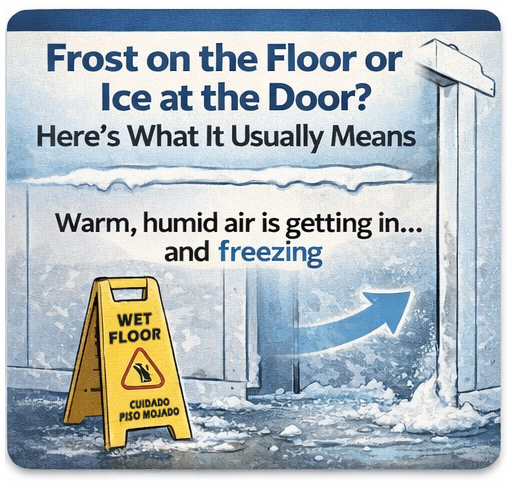
Walk-in freezers and coolers constantly remove heat and moisture. But when extra humidity enters the box (through the door, seams, or airflow problems), it turns into frost or ice, especially near cold surfaces and traffic areas.
Think of it like this:
More moisture in = more ice out.
If You Have Ice at the Door…
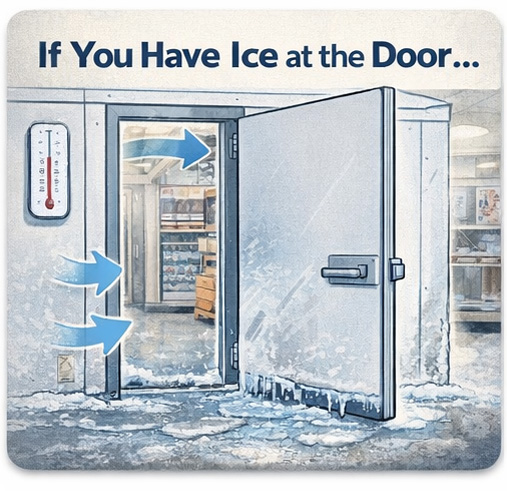
Ice near the door opening is one of the most common problems — and it usually means air leaks or too much warm-air exposure.
Most common causes:
✅ Door isn’t sealing tightly (worn or damaged gasket)
✅ Door is being left open too long during stocking
✅ High-traffic use (frequent entry/exit)
✅ Door hardware is out of alignment (hinges/latch not pulling the door shut fully)
✅ Missing or worn sweep/threshold letting air in at floor level
What it leads to:
- frost on the door frame
- ice at the threshold
- “snow” at the entry
- harder door operation and poor sealing
If You Have Frost or Ice on the Floor…
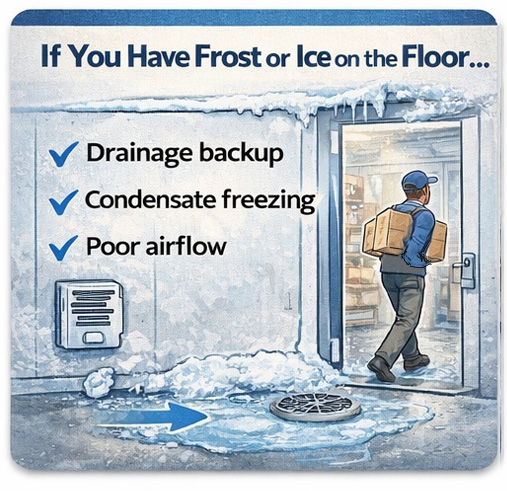
Ice on the floor is both a safety hazard and a sign something is off.
Usually means:
✅ Moisture intrusion + freezing at the coldest point
✅ Water isn’t draining properly (defrost water backs up and refreezes)
✅ Airflow issues causing uneven temperatures and cold spots
If the ice seems to start inside and “spread,” it’s often a drainage/defrost situation. If it starts right at the entrance, it’s usually a door leak or traffic issue.
What You Can Check Quickly (No Tools Needed)
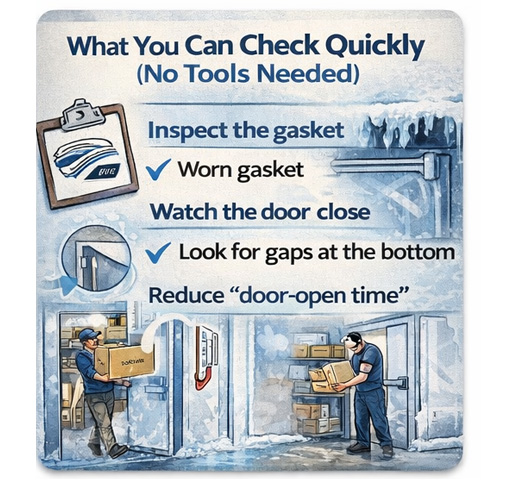
1) Inspect the gasket
If it’s cracked, stiff, torn, or dirty, it may not seal correctly—causing constant humidity entry.
2) Watch the door close
If it doesn’t shut cleanly every time, you may have alignment, closer, or latch issues.
3) Look for gaps at the bottom
A worn sweep or damaged threshold can let warm air rush in at floor level (and that’s where ice loves to form first).
4) Reduce “door-open time”
Long stocking sessions with the door open will flood the box with warm humid air.
Why You Shouldn’t Ignore It
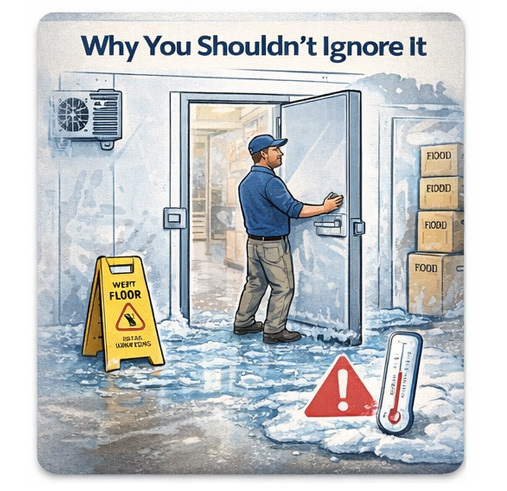
Ice buildup isn’t just cosmetic. Over time it can:
- increase energy costs
- strain your refrigeration system
- block airflow
- create unsafe slip hazards
- cause temperature instability and product risk
The Bottom Line
Ice tells a story. And in most cases it means one of three things:
- Door leak / poor seal
- Too much humidity entering from traffic
- Drainage or airflow problems
If you address the cause early, you can often prevent a bigger repair later — and keep your walk-in running colder, safer, and more efficiently.