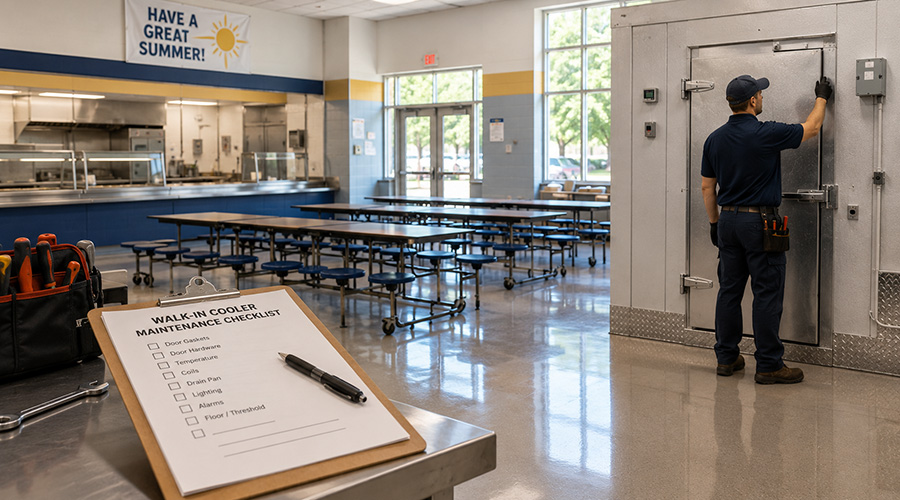
How K-12 Facilities Can Use Summer Break to Improve Reliability, Efficiency, and Food Safety
For school nutrition programs, summer break creates a unique opportunity.
The cafeteria is quieter. Student traffic disappears. Deliveries slow down. And maintenance teams finally gain access to equipment that operates continuously throughout the school year.
That makes summer the perfect time to inspect, repair, and upgrade your walk-in coolers and freezers before students return.
Many refrigeration issues that cause emergency service calls during the school year begin as small problems that go unnoticed. Worn door gaskets, failing heaters, airflow restrictions, damaged floors, and neglected refrigeration components often develop slowly until they create larger operational challenges.
A proactive summer inspection can help schools:
- Reduce energy costs
- Improve food safety
- Prevent emergency breakdowns
- Extend equipment life
- Improve temperature consistency
- Prepare for back-to-school inventory increases
Here are the most important areas every school should evaluate during summer break.
1. Inspect Door Gaskets and Seals
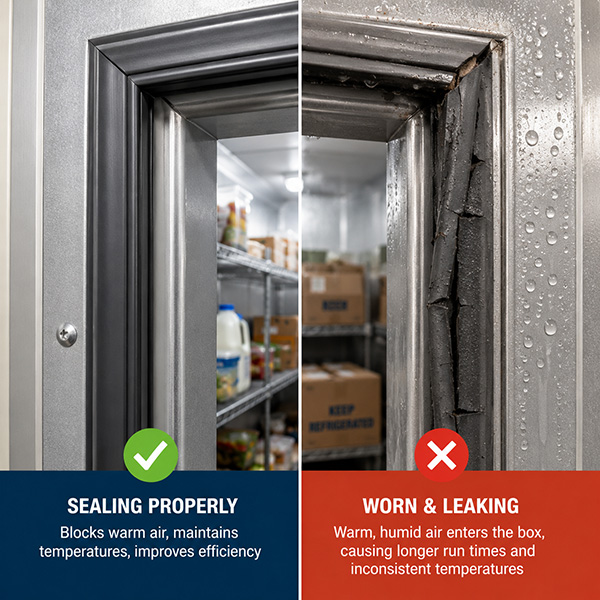
School walk-ins experience heavy use throughout the academic year.
Thousands of door openings, cart traffic, and daily wear can damage door gaskets without attracting attention.
Even small gasket failures allow warm, humid air to enter the cooler or freezer, forcing refrigeration systems to run longer and work harder.
What to Look For
- Cracks or tears in gasket material
- Corners pulling away from the frame
- Flattened gasket sections
- Light visible around door edges
- Condensation around cooler doors
- Frost buildup around freezer doors
Replacing worn gaskets is one of the simplest and most cost-effective ways to improve refrigeration efficiency.
2. Verify Door Alignment and Hardware
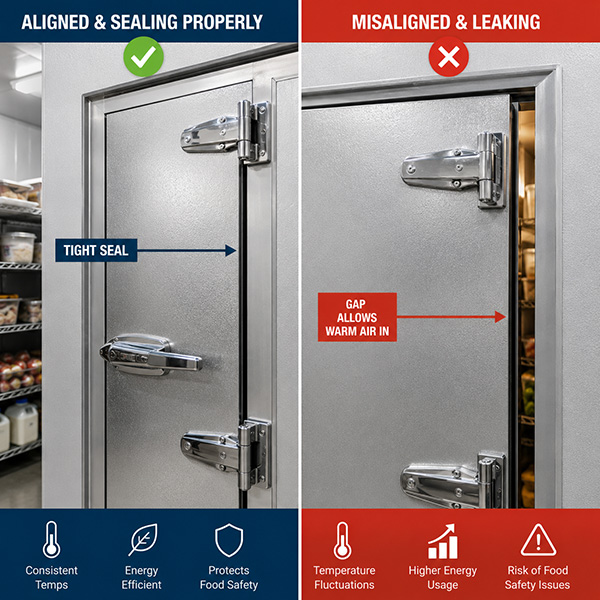
A door can latch while still leaking air.
Over time, hinges settle, strike plates shift, and closers lose adjustment. During busy meal periods, staff often compensate by forcing doors shut, which can accelerate wear.
Summer Inspection Checklist
- Verify door closes completely on its own
- Check hinge alignment
- Test latch engagement
- Inspect strike plate positioning
- Confirm smooth door operation
- Verify door sweep and threshold condition
Properly aligned doors reduce infiltration and improve temperature stability.
3. Clean Evaporator and Condenser Coils
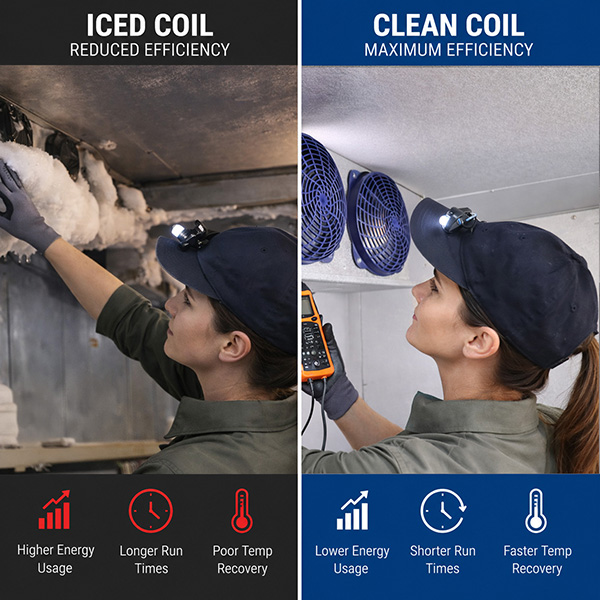
One of the most overlooked maintenance tasks is coil cleaning.
Dust, grease, dirt, and debris accumulate throughout the year and reduce heat-transfer efficiency.
Dirty coils force compressors to operate longer while consuming more energy.
Inspect and Clean
- Evaporator coils
- Condenser coils
- Fan guards
- Drain pans
- Refrigeration compartment surfaces
Clean coils help systems recover faster and operate more efficiently during peak summer temperatures.
4. Check Airflow Throughout the Walk-In
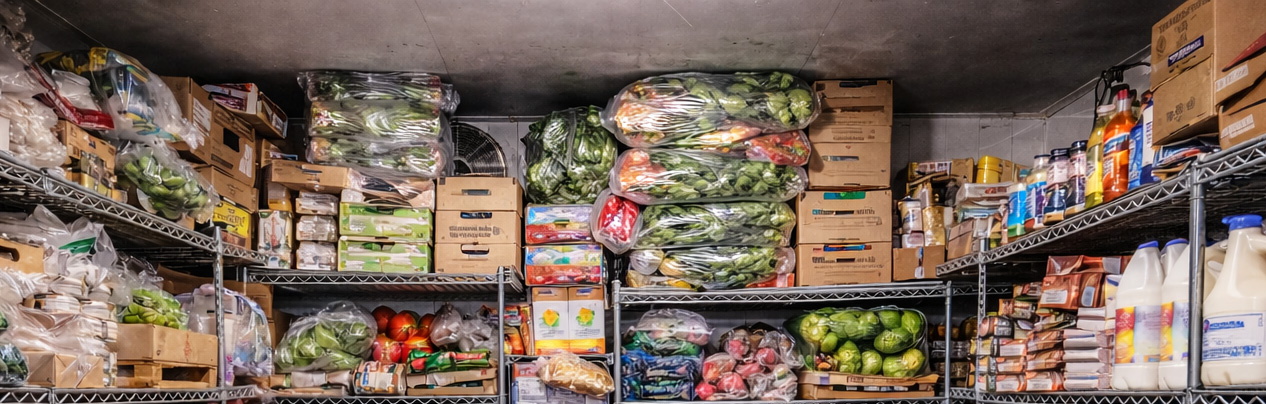
School cafeterias often maximize storage space during the year.
Unfortunately, product stacking can restrict airflow and create temperature inconsistencies.
Summer provides the perfect opportunity to evaluate storage layouts.
Verify
- Clear space around evaporator fans
- Adequate airflow between shelving units
- Product not stored against walls
- No blocked air discharge paths
- Uniform airflow throughout the box
Proper airflow helps maintain consistent temperatures and reduces compressor runtime.
5. Inspect Floors, Thresholds, and Traffic Areas
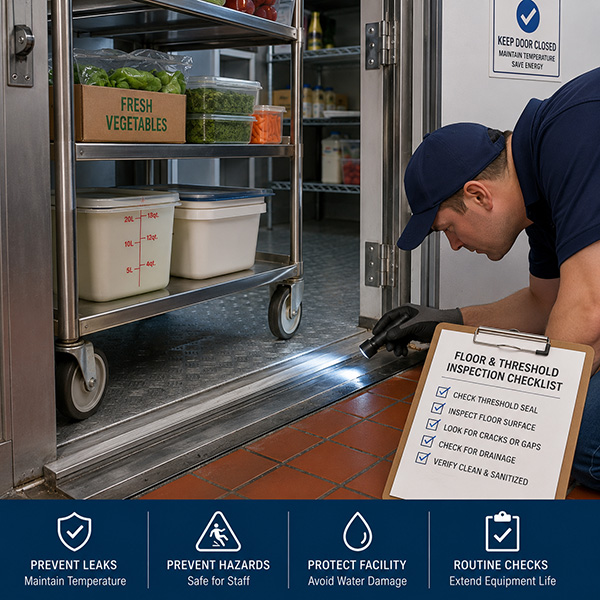
High-volume school kitchens put significant stress on walk-in floors.
Repeated cart traffic, pallet movement, and daily use can create damage that worsens over time.
Look For
- Floor deterioration
- Damaged thresholds
- Loose transition strips
- Cracked sealants
- Water intrusion areas
- Surface corrosion
Addressing these issues during summer prevents larger repairs later.
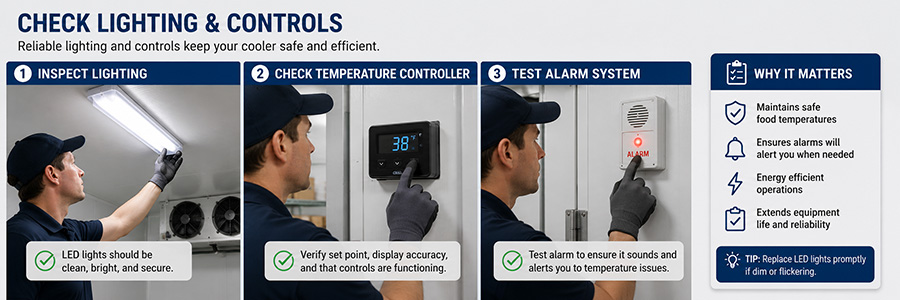
6. Test Lighting and Electrical Components
Lighting issues often go unnoticed during the school year because staff adapt around them.
Summer maintenance should include a complete electrical inspection.
Verify
- Interior lighting operation
- LED fixture performance
- Switch function
- Electrical connections
- Door heater operation
- Alarm systems
- Temperature monitoring devices
Reliable lighting and monitoring improve both safety and efficiency.
7. Review Temperature Performance
Before students return, confirm the walk-in is maintaining proper temperatures consistently.
Monitor
- Cooler temperatures
- Freezer temperatures
- Recovery times
- Defrost operation
- Compressor cycling patterns
Temperature fluctuations may indicate larger mechanical issues that should be addressed before peak cafeteria demand resumes.
8. Evaluate Opportunities for Energy Savings
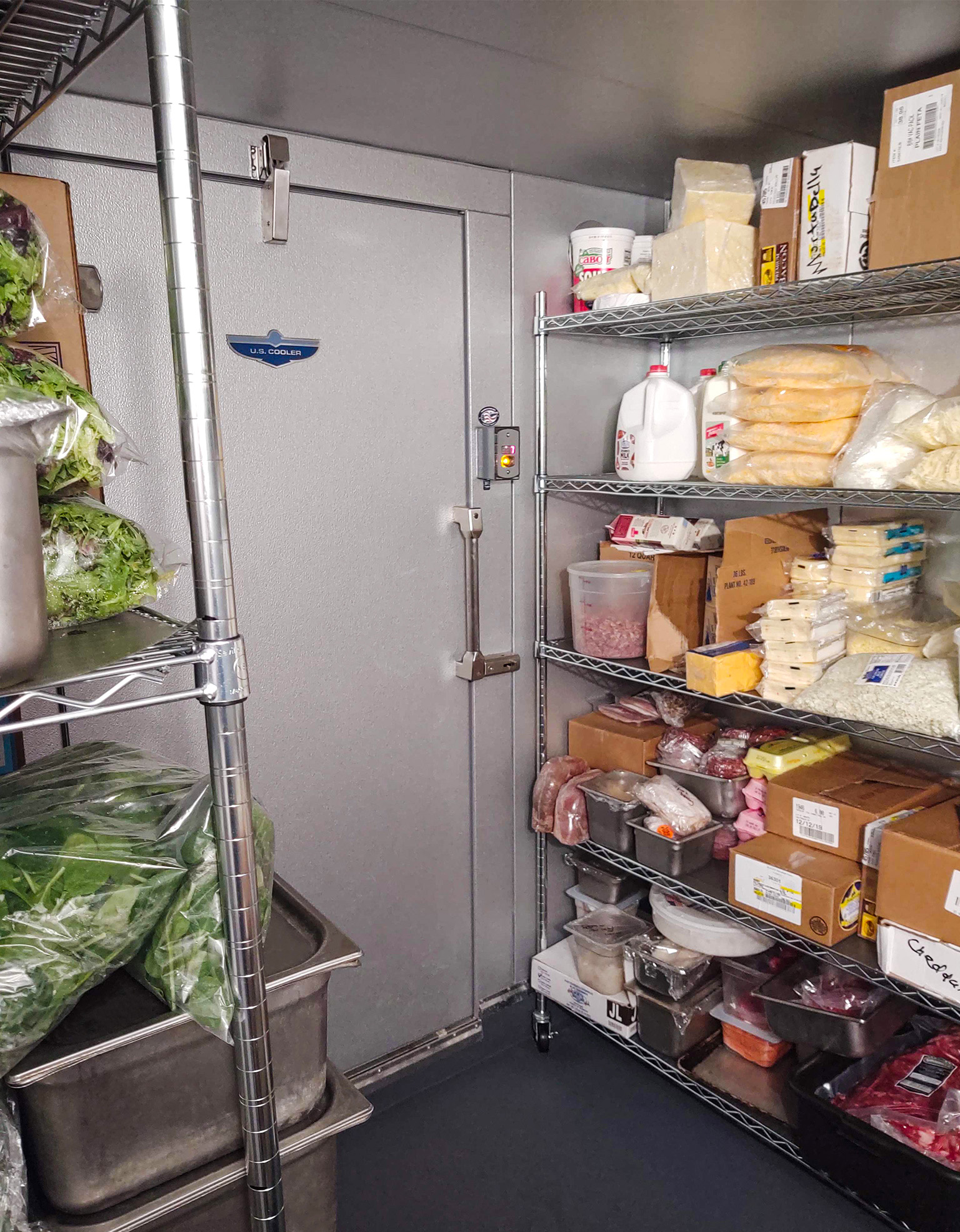
Summer is also an excellent time to identify upgrades that can reduce operating costs.
Many schools continue to operate aging refrigeration systems that consume more energy than necessary.
Potential improvements include:
- LED lighting upgrades
- New door gaskets
- Strip curtains
- Door closers
- Digital temperature monitoring
- Refrigeration control upgrades
- Replacement doors
- Additional insulation improvements
Even small upgrades can create meaningful long-term savings.
9. Prepare for Back-to-School Inventory Loads
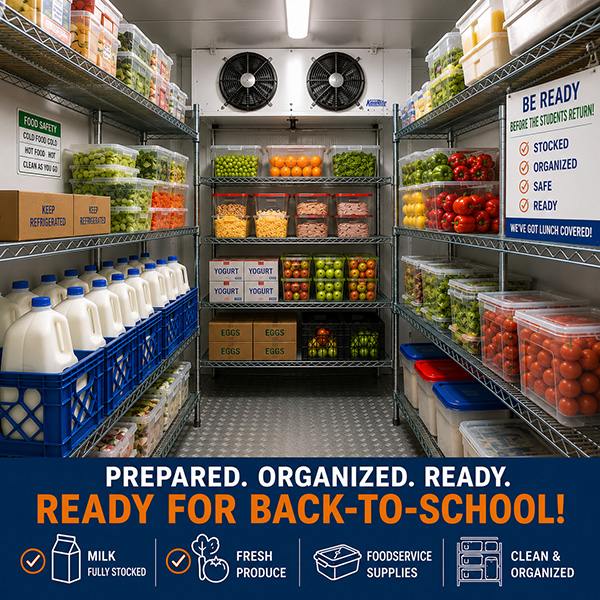
As summer ends, cafeterias begin receiving larger food deliveries in preparation for the school year.
Walk-ins should be ready to handle increased product loads immediately.
Before reopening:
- Verify shelving condition
- Remove unused equipment
- Organize storage zones
- Clean interior surfaces
- Confirm refrigeration performance
- Train staff on proper loading practices
Preparation now helps avoid operational issues when food volume increases.
Why Summer Maintenance Matters
School walk-in coolers and freezers operate year-round, even when students are away.
Using summer break to inspect, maintain, and improve refrigeration systems helps schools reduce unexpected repairs, improve food safety, lower operating costs, and ensure reliable performance throughout the upcoming school year.
A few hours of preventive maintenance during the summer can prevent costly disruptions when classes resume.
At ReFridge, we help schools keep their refrigeration systems operating efficiently with replacement doors, hardware, gaskets, and walk-in solutions designed for the demands of educational foodservice environments.
School Summer Maintenance FAQ
How often should school walk-in coolers be serviced?
Most school walk-in coolers should receive a professional inspection at least annually, with summer break being the ideal time to perform maintenance and repairs.
Why is summer break the best time for walk-in maintenance?
Summer provides access to equipment with reduced operational demands, allowing maintenance teams to inspect doors, refrigeration systems, flooring, and hardware without disrupting meal service.
How can schools improve walk-in cooler efficiency?
Replacing worn door gaskets, cleaning coils, improving airflow, upgrading lighting, and repairing door alignment can significantly improve efficiency and reduce operating costs.
What causes walk-in coolers to run longer during summer?
Higher outdoor temperatures, increased humidity, air leaks, dirty coils, blocked airflow, and warm product loads can all increase refrigeration runtime.
How long should a school walk-in cooler last?
With proper maintenance, a quality walk-in cooler can often provide 20 years or more of reliable service.