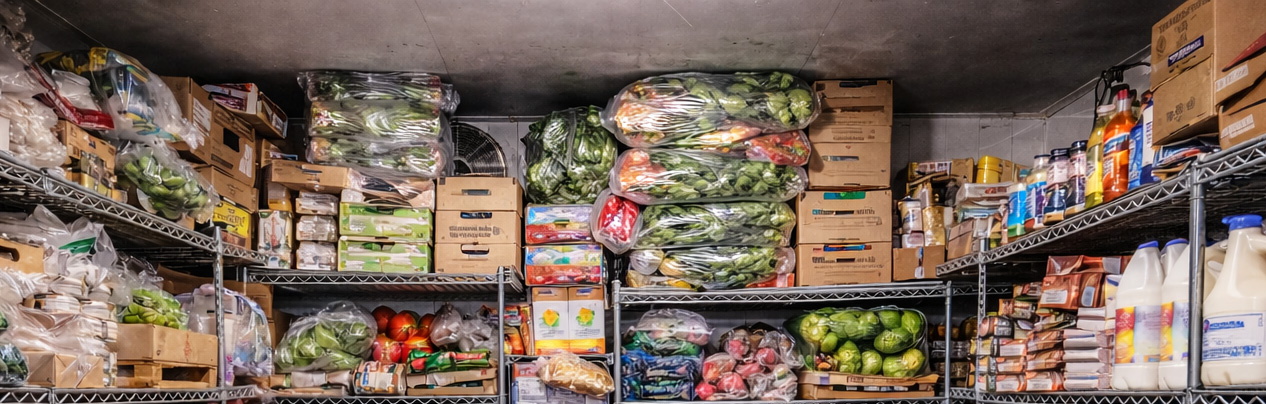
A full walk-in cooler or freezer can feel like a sign that business is good. But when “full” becomes overloaded, your refrigeration system may have a much harder time doing its job.
Walk-ins depend on more than cold temperatures. They rely on consistent airflow throughout the entire space. When boxes, shelving, pallets, or inventory interrupt that airflow, you can end up with uneven temperatures, longer equipment run times, frost or ice buildup, and products that simply don’t stay as cold as they should.
Your Walk-In Needs Room to Breathe
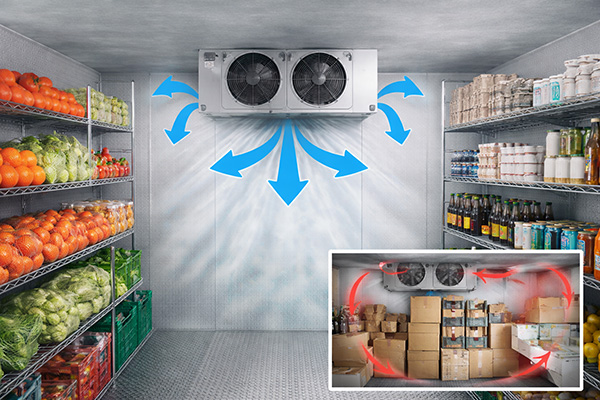
The evaporator doesn’t simply produce cold air and stop there. Fans move air across the evaporator coil and circulate that conditioned air throughout the walk-in before it returns to the unit.
For that process to work effectively, the air needs a clear path.
When inventory is packed tightly together, stacked too high, pushed against walls, or placed directly in front of the evaporator, those circulation paths can become restricted. Instead of reaching the entire walk-in evenly, cold air may take the easiest route back to the evaporator while other areas receive less cooling.
The result? Cold spots in some areas and warmer spots in others—even though the thermostat may appear normal.
What Happens When You Overload a Walk-In?
1. Airflow Becomes Restricted
This is the biggest problem.
Boxes stacked close to the evaporator can interfere with both the supply and return airflow. Closely packed shelving can also prevent conditioned air from circulating around stored products.
The refrigeration equipment may still be operating normally, but the cold air it produces can’t effectively reach every part of the walk-in.
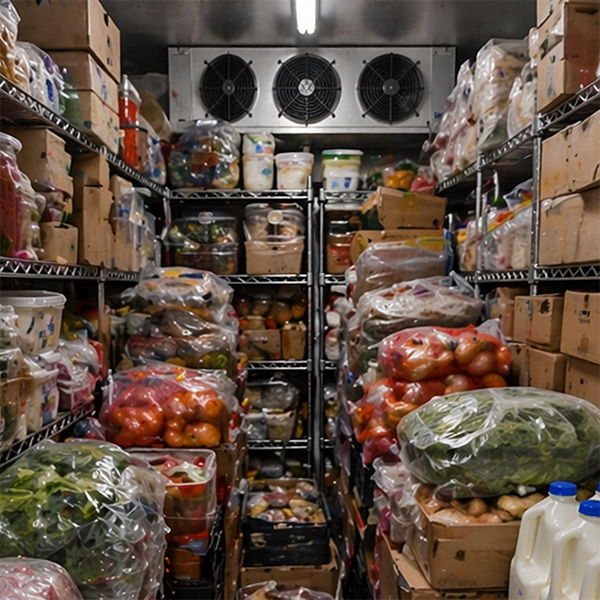
2. Temperatures Can Become Uneven
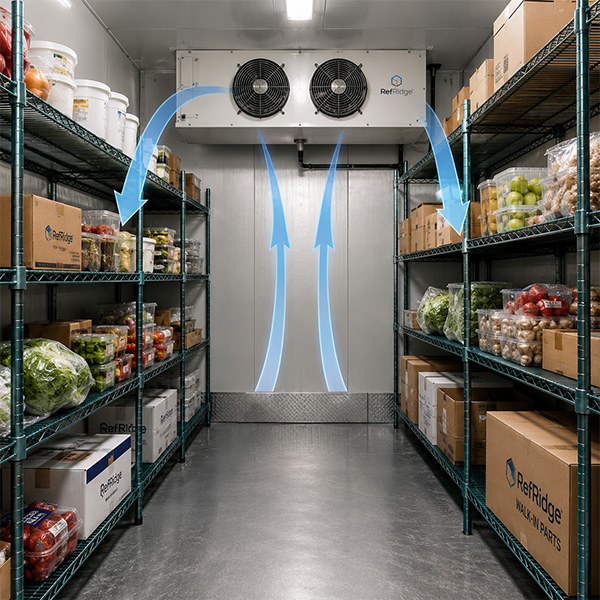
Poor circulation can create pockets of warmer air within an otherwise cold walk-in.
That means a temperature reading in one location doesn’t necessarily tell you what’s happening everywhere else. Products tucked into an overcrowded corner or surrounded by tightly packed cases may experience different conditions than products located near a clear airflow path.
For temperature-sensitive inventory, consistency matters.
3. Your Refrigeration System May Work Harder
If the walk-in struggles to reach or maintain its set temperature, refrigeration equipment may run longer trying to remove the heat.
Longer or excessive compressor operation can be associated with refrigeration load and restricted evaporator airflow, among other potential system issues.
That can mean unnecessary energy use and additional wear on refrigeration components.
4. Frost and Ice Problems Can Develop
Restricted airflow can also contribute to evaporator icing and reduced airflow. Once frost begins interfering with the coil, airflow can decrease even further, creating a cycle of declining performance.
Freezers can be especially sensitive to airflow problems because frost and ice can quickly become another obstruction.
Overloading Isn’t Just About How Much You Store

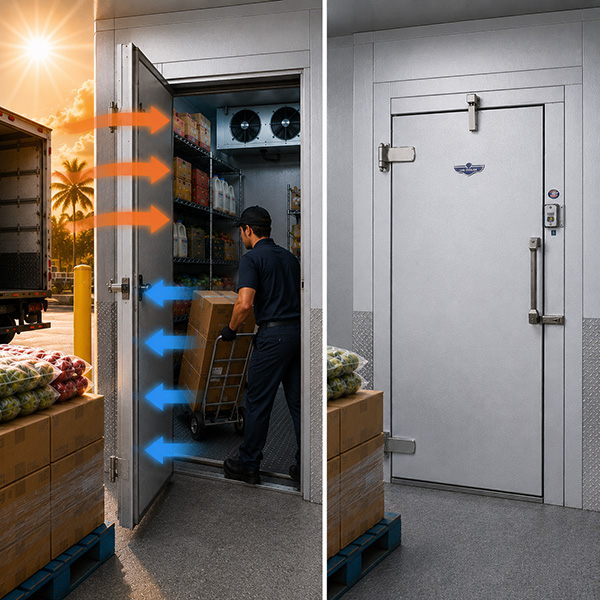
There’s another type of overloading that’s easy to overlook: adding too much warm product at once.
Your walk-in is designed around a calculated refrigeration load. When a large delivery of product enters at a temperature substantially above the walk-in’s operating temperature, the refrigeration system must remove that additional heat.
Loading practices therefore matter even when there is technically enough physical room for everything. Refrigeration sizing considers product load and the amount of heat that must be removed as products are pulled down to storage temperature.
A walk-in can look organized and still be temporarily overloaded from a refrigeration standpoint.
Signs Your Walk-In May Be Overloaded
Take a look inside. You may have an airflow problem if:
- Product is stacked directly in front of or underneath the evaporator.
- Boxes are packed tightly against walls.
- Inventory is stacked nearly to the ceiling.
- Shelving is so full that very little air can move between products.
- Cases or pallets obstruct the normal return-air path.
- Some areas of the walk-in consistently feel warmer than others.
- The refrigeration system seems to run for unusually long periods.
- Frost or ice repeatedly develops around the evaporator.
- Temperatures take a long time to recover after deliveries.
These symptoms don’t automatically mean overloading is the cause—refrigeration or maintenance issues can produce similar symptoms—but your loading arrangement is an easy place to start looking.
Give Cold Air Somewhere to Go

Good walk-in organization isn’t about leaving valuable storage space unused. It’s about using the space without sacrificing circulation.
Keep products away from the evaporator’s intake and discharge areas, avoid stacking inventory against the walls, and leave open pathways for air to move around and above stored products. Wire shelving can also help promote circulation compared with solid surfaces that interrupt airflow.
And remember: every refrigeration system and walk-in configuration is different. Always follow the equipment manufacturer’s required clearances rather than relying on a universal spacing rule.
If You’re Constantly Running Out of Room, Your Walk-In May Be Too Small
Occasionally having a packed walk-in after a large delivery is one thing.
Having to pack it from floor to ceiling every week is something else.
If your operation has grown but your refrigerated storage hasn’t grown with it, organization can only solve so much. Continually overcrowding the walk-in may be a sign that your business simply needs additional refrigerated storage capacity.
Until you’re ready to expand, protecting the airflow you already have can help you get better performance from your existing walk-in.
Don’t Pack Away Your Performance
Your walk-in cooler or freezer was designed to maintain a controlled environment—but it needs proper airflow to do it.
A few extra cases squeezed onto a shelf may not seem significant. Multiply that across an entire walk-in, though, and those small obstructions can dramatically change how air moves through the space.
Keep it organized. Keep airflow paths open. And give your walk-in enough room to do its job.
Need replacement parts to help keep your walk-in performing its best? From door hardware and gaskets to heater wire and other walk-in essentials, ReFridge has the parts you need to keep your cooler or freezer working properly.