You remembered the shelves, walls, and floor—but what about the parts attached to them?
Routine cleaning is an important part of maintaining any walk-in cooler or freezer. But while large surfaces tend to get most of the attention, smaller components can be easy to overlook. Door gaskets, sweeps, thresholds, strip curtains, thermometers, drains, and door hardware all live in a busy environment where dirt, grease, food residue, moisture, and debris can accumulate.
Cleaning these areas isn’t just about appearance. Keeping walk-in components clean can make it easier to spot wear or damage, help doors operate as intended, and prevent buildup from becoming a bigger maintenance issue.
Here are some commonly overlooked areas worth adding to your cleaning routine.
1. Door Gaskets
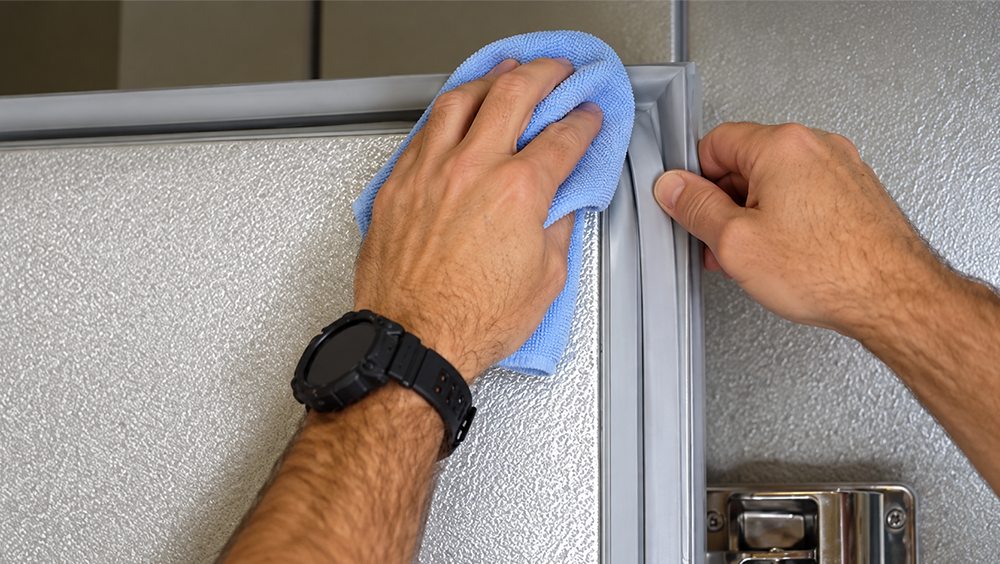
Walk-in door gaskets are handled every day but can easily be missed during routine cleaning. Dirt and food residue can collect in the folds and along the surface of the gasket.
Gently clean the gasket, paying particular attention to its folds and corners. While you’re there, take a closer look for:
- Cracks, tears, or splitting
- Areas that have become hard or brittle
- Sections pulling away from the door
- Gaps where the gasket is no longer sealing properly
Avoid harsh chemicals or abrasive tools that could damage the gasket material, and follow the manufacturer’s cleaning recommendations when available.
Cleaning bonus: A clean gasket makes it much easier to see when replacement may be needed.
2. Door Sweeps and Thresholds
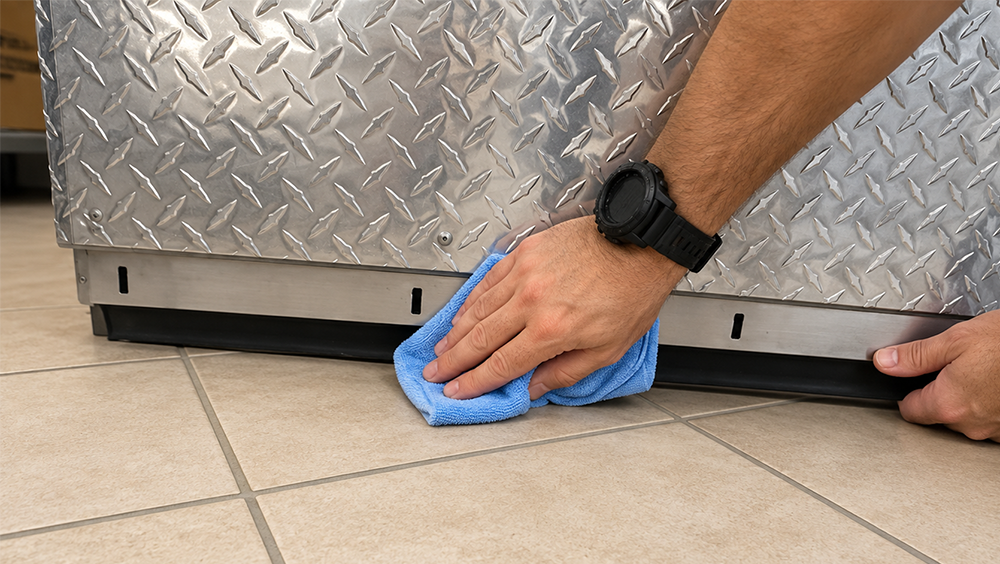
The bottom of the walk-in door is another easy place for dirt and debris to hide.
Door sweeps can collect grime from repeated contact near the floor, while thresholds naturally catch dirt as employees, carts, and products move in and out of the walk-in.
Clean around the sweep and threshold and remove anything that could interfere with the door closing properly. This is also a good opportunity to inspect the sweep for cracking, tearing, or excessive wear.
Pay attention to the threshold itself as well. Persistent moisture, ice, or unusual buildup around the entrance may deserve a closer look rather than simply being cleaned away.
3. Strip Curtains
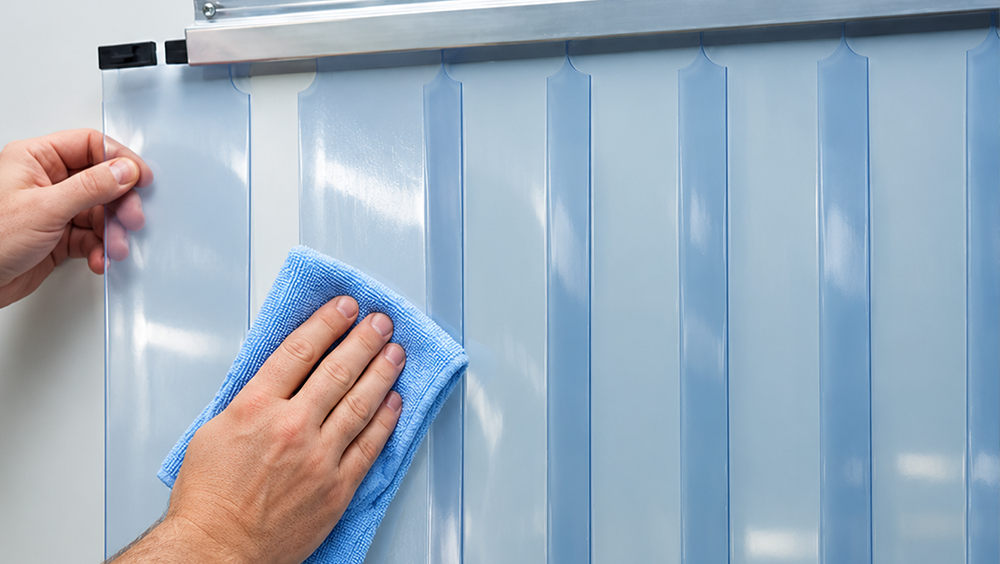
Strip curtains are constantly touched by employees, boxes, carts, and products. Over time, the clear strips can become coated with fingerprints, grease, dust, and other residue.
Wipe both sides of each strip using a cleaning method appropriate for the curtain material. Avoid abrasive cleaners or tools that could scratch or cloud the strips.
Cleaning is also a convenient time to straighten the strips and look for:
- Torn or cracked material
- Missing strips
- Excessive curling
- Strips that no longer overlap correctly
If a strip curtain is damaged enough that it no longer hangs or overlaps as intended, cleaning alone won’t solve the problem.
4. Thermometers and Temperature Displays
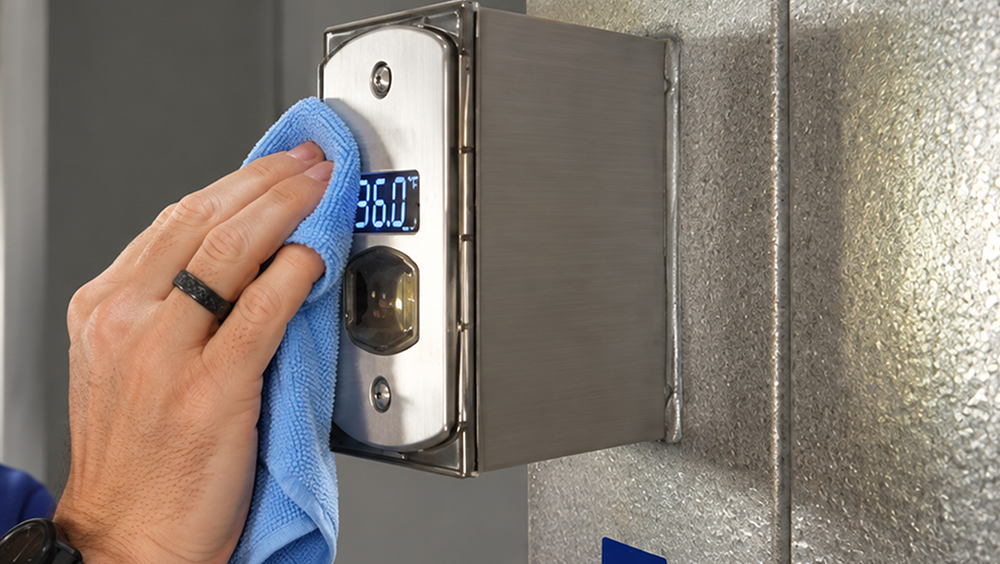
You probably look at your walk-in thermometer regularly—but when was the last time you cleaned it?
Dust, grease, fingerprints, and residue can build up on thermometer housings and temperature displays, particularly in kitchens and other busy foodservice environments.
Clean accessible exterior surfaces carefully without allowing cleaner or excess moisture to enter the device. Electronic components may have specific cleaning requirements, so follow the manufacturer’s instructions.
Keeping displays clean has a simple benefit: they’re easier to read.
5. Drain-Related Components
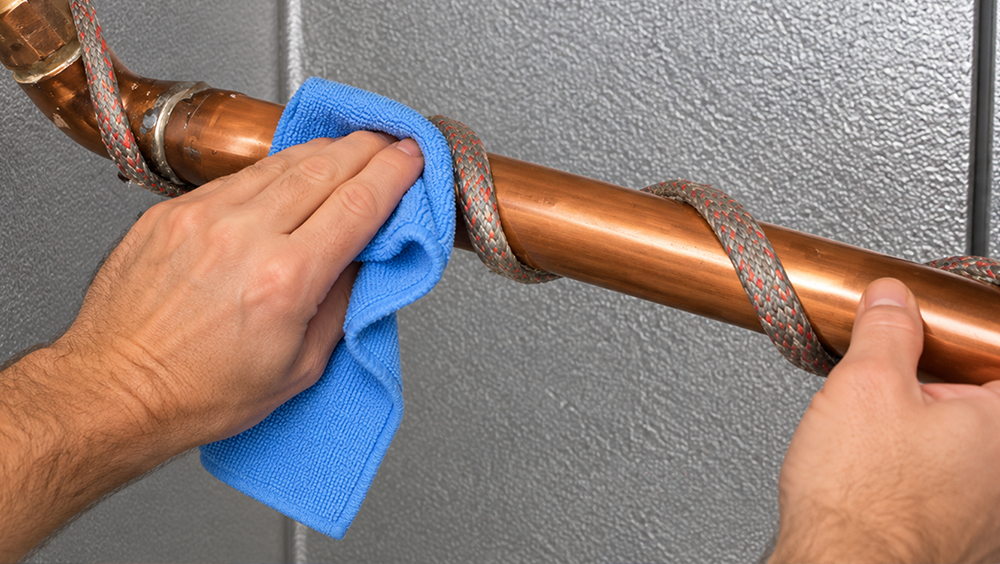
Drains and accessible drain-related components can quickly collect debris and buildup. If they are part of your walk-in’s routine maintenance, keep accessible areas clean and watch for anything unusual.
Standing water, slow drainage, odors, ice, or recurring buildup shouldn’t simply become part of the cleaning routine. Those conditions may indicate that the drainage system needs further attention.
Because drain configurations vary, follow the recommendations for your specific equipment and have a qualified service professional address problems beyond normal accessible cleaning.
6. Door Handles, Latches, Hinges, and Closers
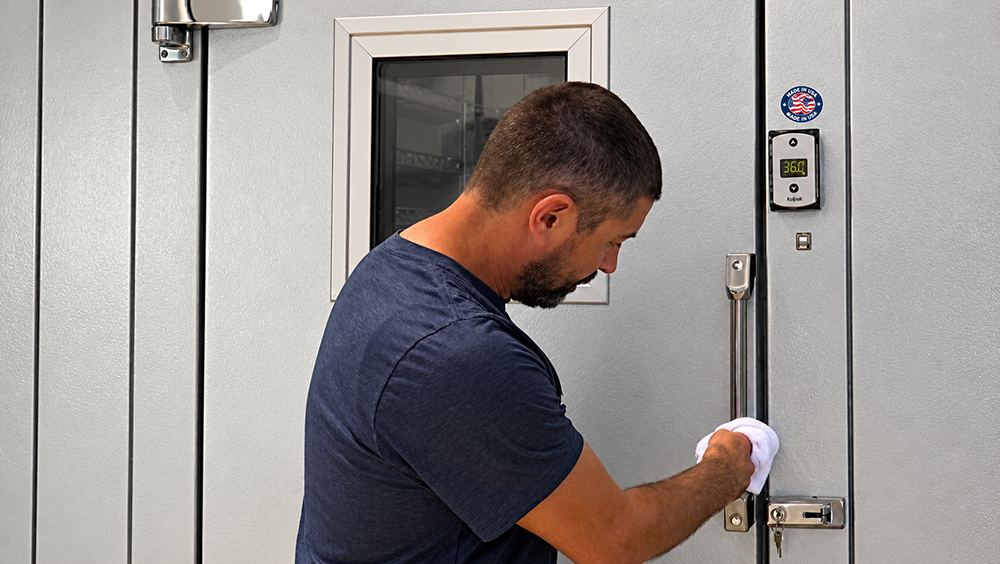
Door hardware is touched and used constantly, making it another area that deserves regular attention.
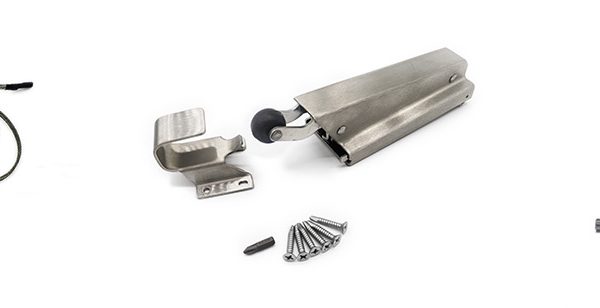
Wipe down accessible surfaces on handles, latches, hinges, and door closers according to the hardware manufacturer’s recommendations. Avoid flooding mechanical components with water or cleaning solution.
As you clean, watch for hardware that:
- Feels loose
- Is difficult to operate
- Has visible damage
- Is beginning to corrode
- Prevents the door from closing or latching normally
Cleaning gives you an up-close look at components you may otherwise use hundreds of times without really inspecting.
Cleaning Is Also Inspection Time
One of the biggest benefits of cleaning these smaller parts is the opportunity to notice changes early.
A torn gasket is easier to see when it isn’t covered in residue. A worn sweep is easier to notice when you’re cleaning underneath the door. Loose hardware may become obvious when you’re wiping down a handle or hinge.
Instead of thinking of cleaning and preventive maintenance as completely separate jobs, use routine cleaning as an opportunity to give your walk-in’s most frequently used components a quick visual inspection.
Don’t Forget the Small Stuff
Shelves, walls, and floors may make up most of your walk-in, but they’re only part of what keeps the space functional.
Adding gaskets, sweeps, thresholds, strip curtains, thermometers, drains, and accessible door hardware to your cleaning checklist can help keep those components in better condition—and help you catch worn or damaged parts before they become bigger problems.
When cleaning reveals a part that’s cracked, torn, worn, or no longer doing its job, ReFridge carries replacement parts and accessories for walk-in coolers and freezers, including door handles, hinges, closers, gaskets, shelving, and more.
Clean it. Inspect it. Replace it when needed.