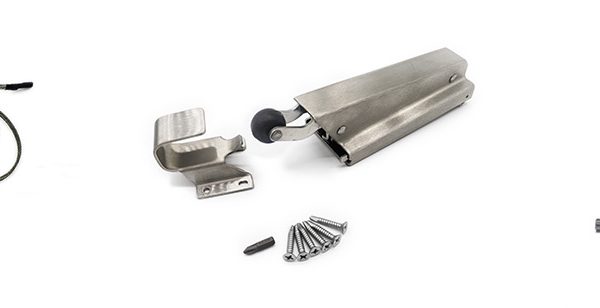
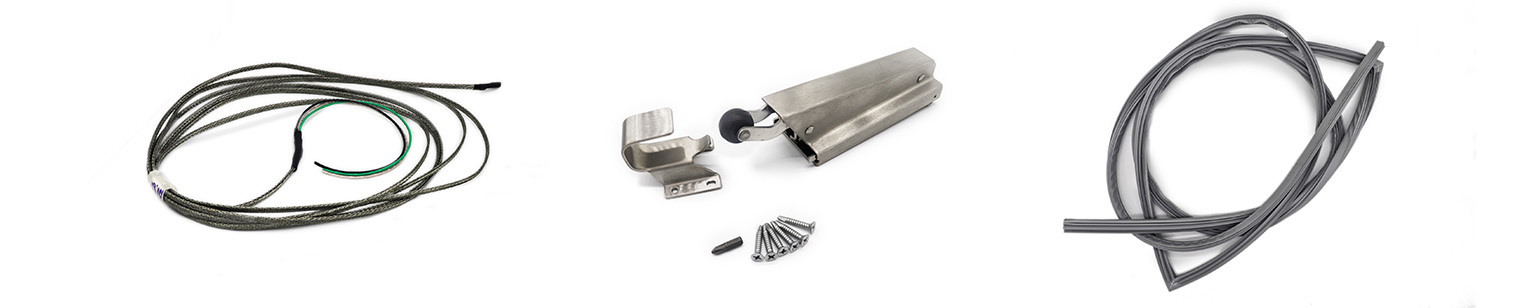
One of the biggest myths in the walk-in world is that you need the exact original brand to replace a walk-in door part.
People assume:
- “This is a Brand X walk-in, so I have to buy Brand X parts.”
- “If I don’t have the model number, I’m stuck.”
- “The OEM part is the only one that will fit.”
In reality, a huge percentage of common walk-in door components are universal or cross-compatible across many manufacturers.
That’s good news for owners and maintenance teams because it means:
✅ faster repairs
✅ less downtime
✅ more options in stock
✅ better pricing and availability
✅ easier ordering even when labels are missing
Let’s break down what “universal” means, which parts are usually universal, what isn’t, and how to make sure you order the right replacement.
What “Universal” Walk-In Parts Means (and What It Doesn’t)
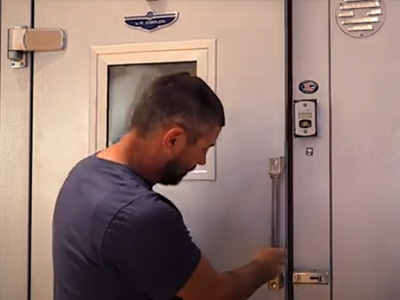
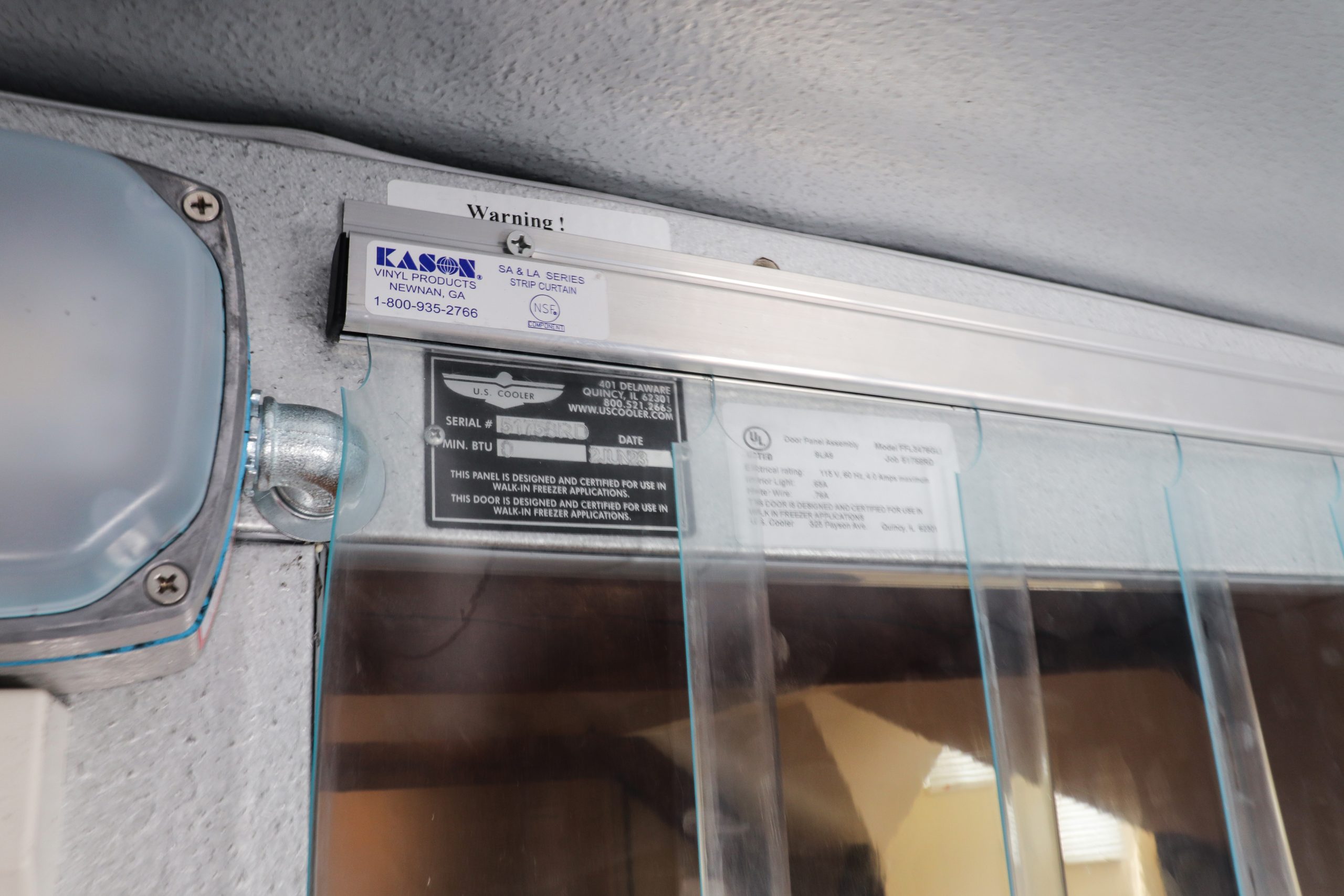
When we say a walk-in part is “universal,” we usually mean one of these:
✅ Universal = standardized function + common mounting patterns
The part performs the same job and fits most common door setups (or fits with minor adjustment).
✅ Universal = cross-compatible across many door brands
A latch, closer, hinge, or sweep may work on multiple walk-in door manufacturers.
❌ Universal does NOT mean “every part fits every door”
There are still variations in:
- door thickness
- hinge orientation
- strike placement
- mounting hole patterns
- heater wire paths
- frame geometry
So yes—many parts are universal, but you still want to verify a few key details before ordering.
The Walk-In Parts That Are Most Often Universal
These are the components that, in most cases, can be replaced with cross-compatible options.
1) Door Closers
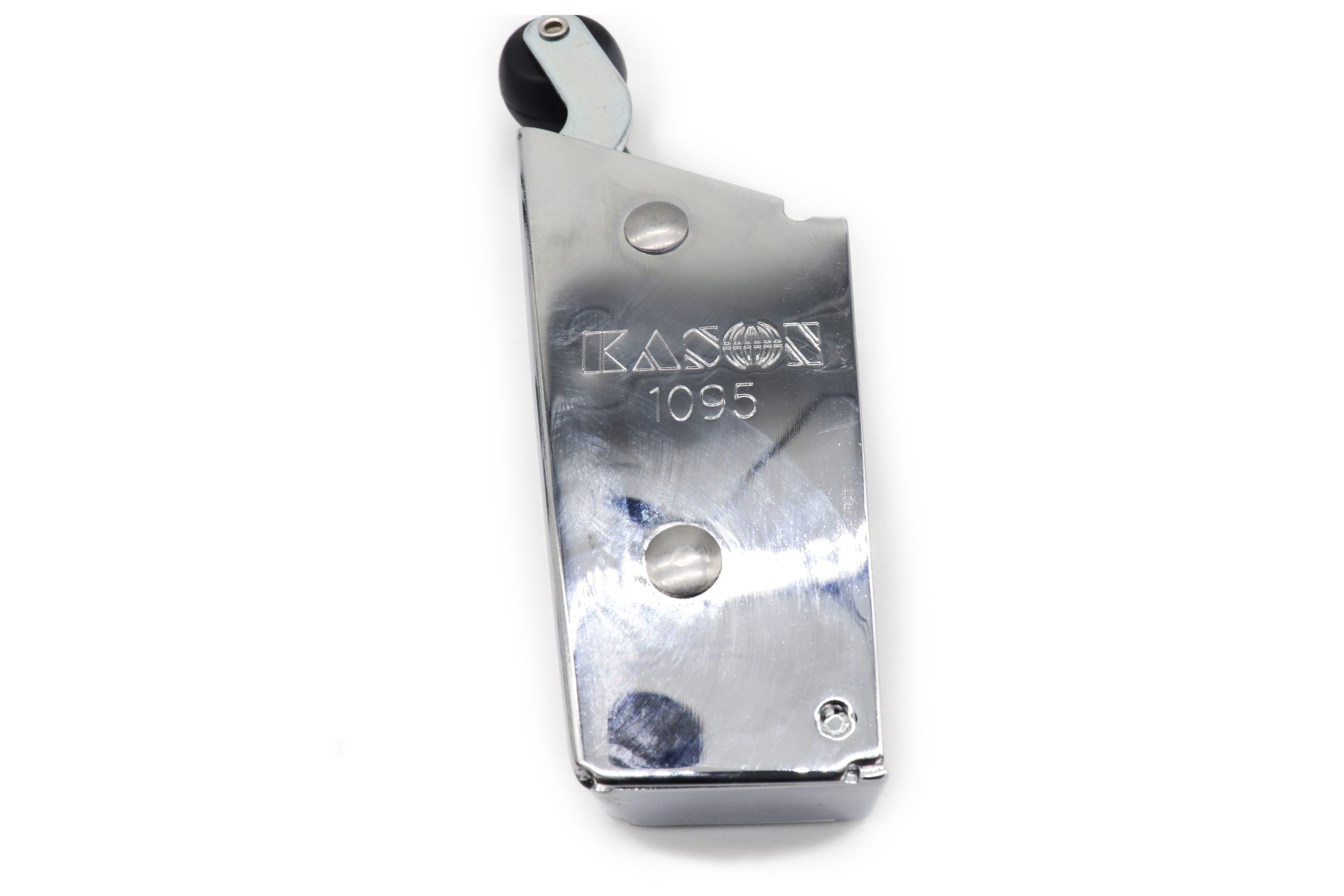
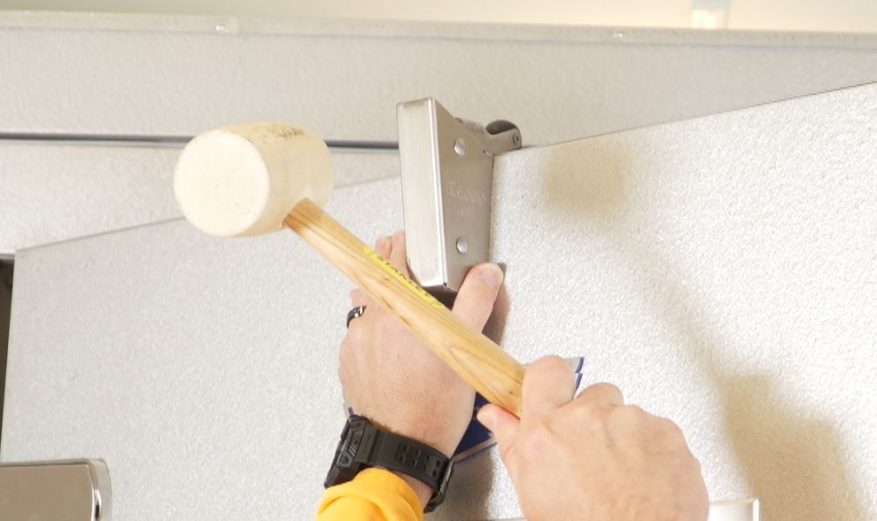
Closers are one of the most universal categories because they’re primarily mechanical and designed around common door operation needs.
Most walk-in door closers share:
- similar arm styles
- similar mounting footprints
- adjustable closing speed
- standard duty ratings
When closers are “universal enough”:
- standard size walk-in cooler/freezer doors
- common closer mounting layouts
- typical door traffic patterns
What to check:
- closer mount location (door vs frame placement)
- arm style (parallel vs standard)
- hole spacing if replacing without drilling
2) Latches and Handles
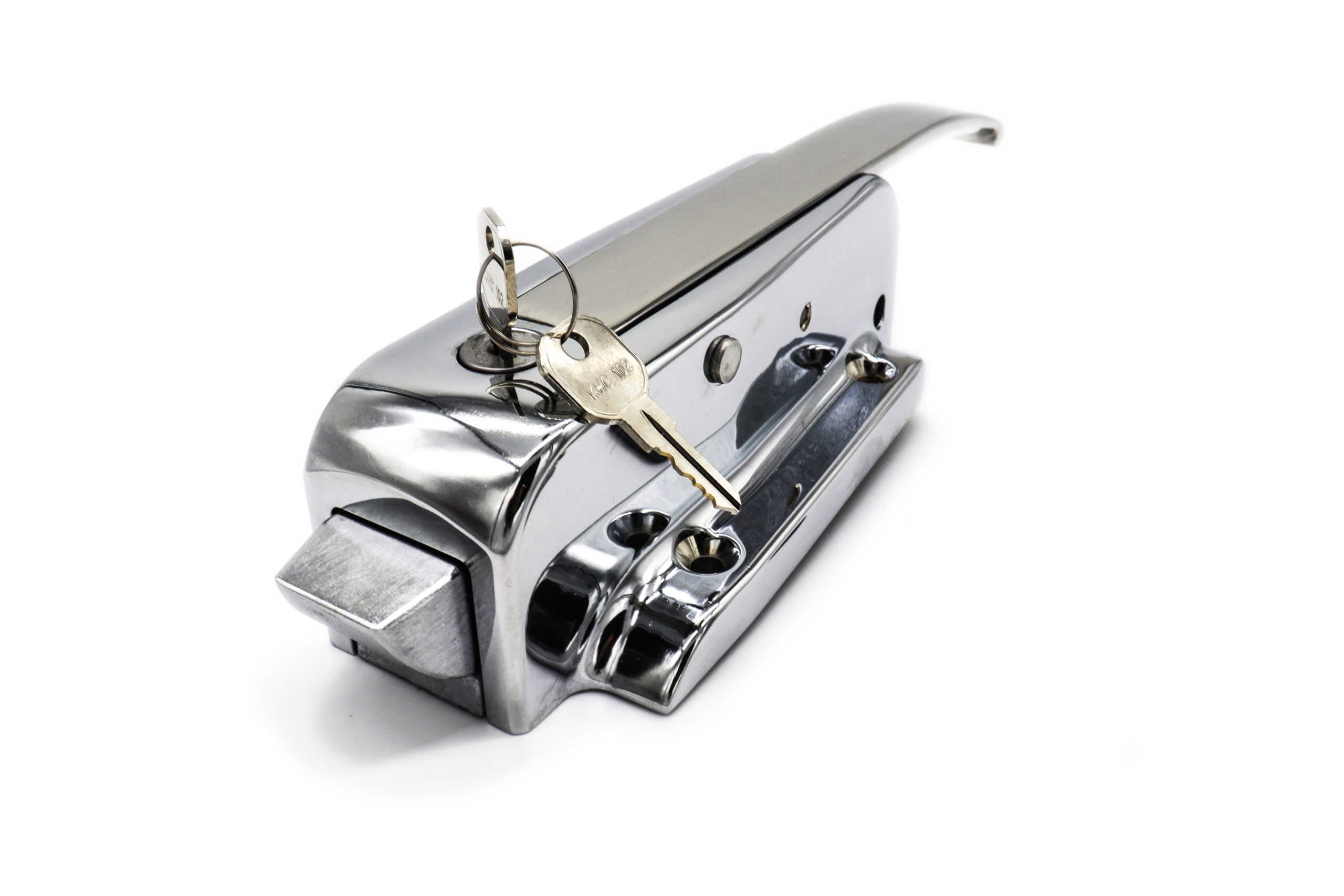
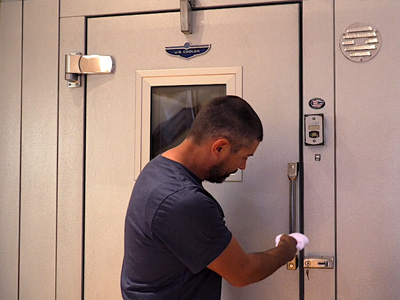
Walk-in latches are built around a very common job:
- pull the door tight
- hold it shut
- release smoothly
- keep gaskets compressed evenly
Because the job is the same across brands, many latch styles are widely interchangeable.
Common universal latch types:
- inside safety release latches
- spring-loaded handles
- heavy-duty walk-in door latches
What to check:
- latch style (flush vs surface mount)
- strike compatibility (or replace strike too)
- door thickness clearance
- inside release requirements (especially important)
3) Door Sweeps and Bottom Seals
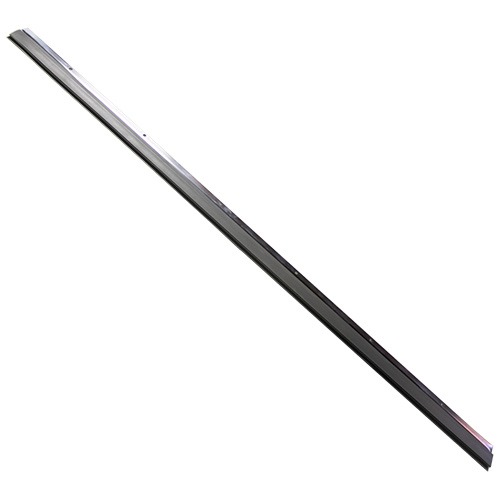
Door sweeps and bottom seals are often universal because they aren’t tied to a specific refrigeration brand—they’re tied to door width and fitment.
Why they’re commonly universal:
- sweeps are trimmed/installed by size
- many have flexible sealing surfaces
- similar mounting methods are used across doors
What to check:
- door width
- sweep type (vinyl, brush, double-fin, etc.)
- mounting method (screw-on vs slide-in track)
4) Strip Curtains
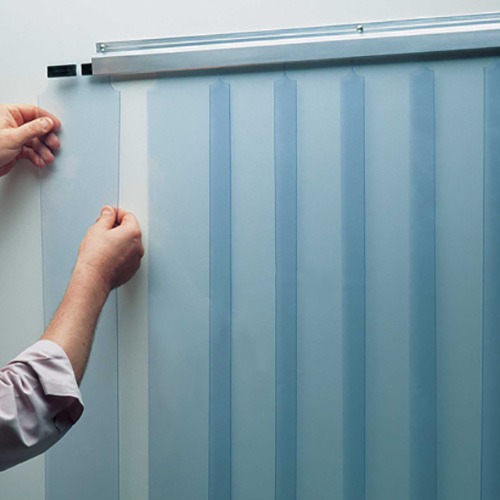
Strip curtains are one of the most universal add-ons in cold storage.
They’re typically chosen by:
- door width and height
- overlap percentage
- strip thickness
- mounting hardware style
If you know the opening size and usage level, strip curtains are a simple universal solution that works almost anywhere.
5) Many Hinges (But Not All)
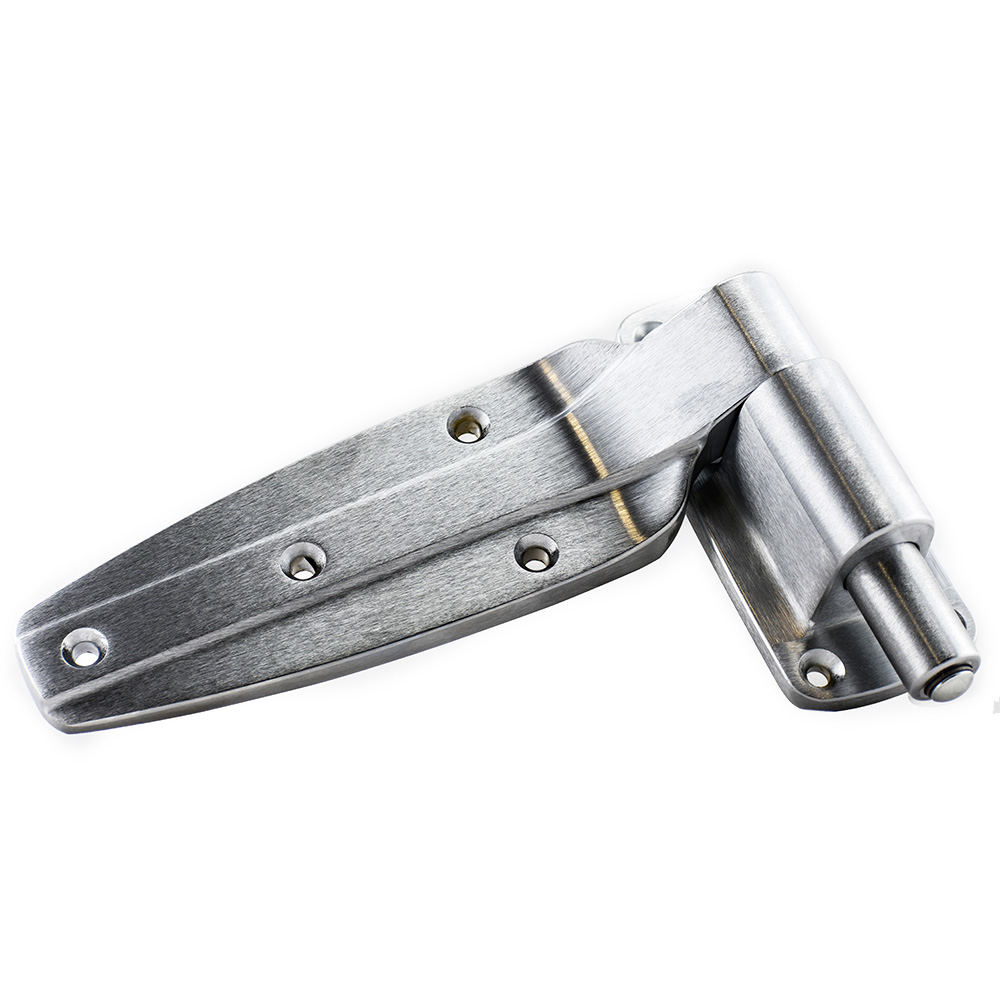
Hinges are a “sometimes universal” category.
Many walk-in door hinges share:
- similar load designs
- common swing direction concepts
- standardized hinge types for cooler vs freezer doors
But hinge compatibility depends heavily on:
- door thickness
- hinge orientation
- mount patterns
- cam rise features (on some styles)
So yes, many hinges cross over—but this is one category where you should verify details carefully.
The Part Everyone Asks About: Are Door Gaskets Universal?
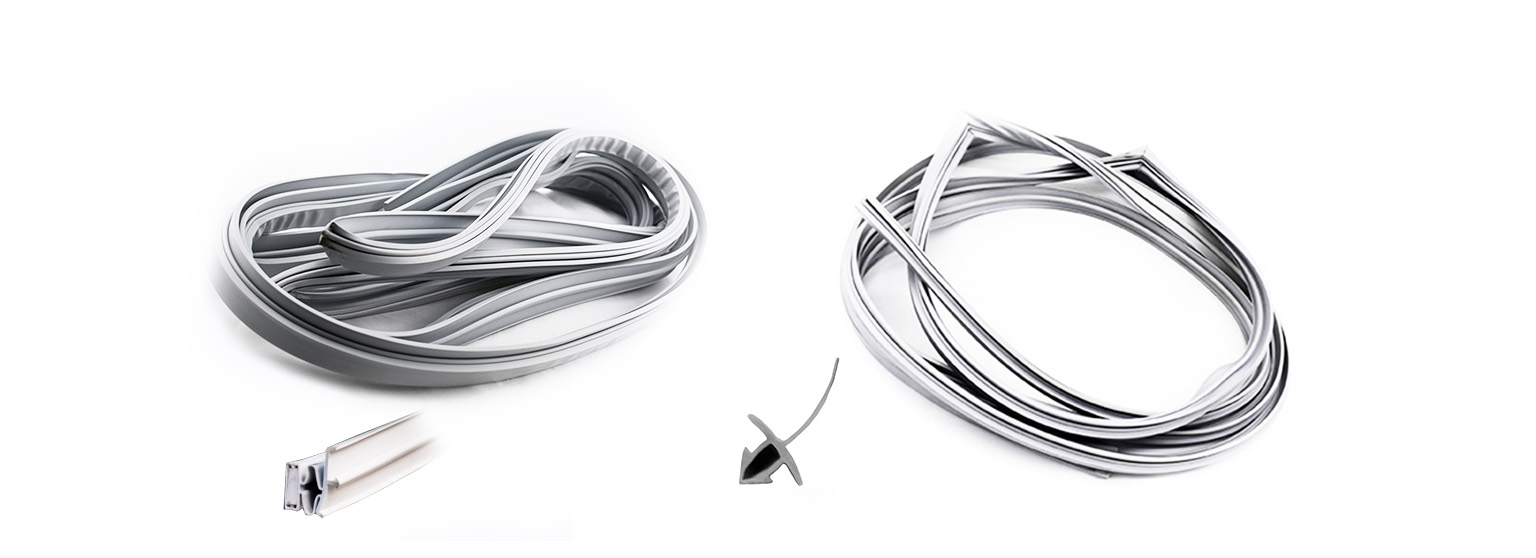
Sort of. Gaskets are incredibly common replacements, and many are available across brands—but they’re not “one-size-fits-all.”
Gaskets are usually selected by:
- door size
- gasket profile shape
- mounting style (snap-in / push-in / dart style)
- frame channel size
Here’s the important point:
✅ Gaskets can often be replaced without OEM branding
❌ But you must match the profile and measurements correctly
That’s why measuring the right way matters.
The Parts That Are NOT Universal (or Less Likely to Be)
Some parts are more tied to specific systems or door designs.
1) Refrigeration System Components
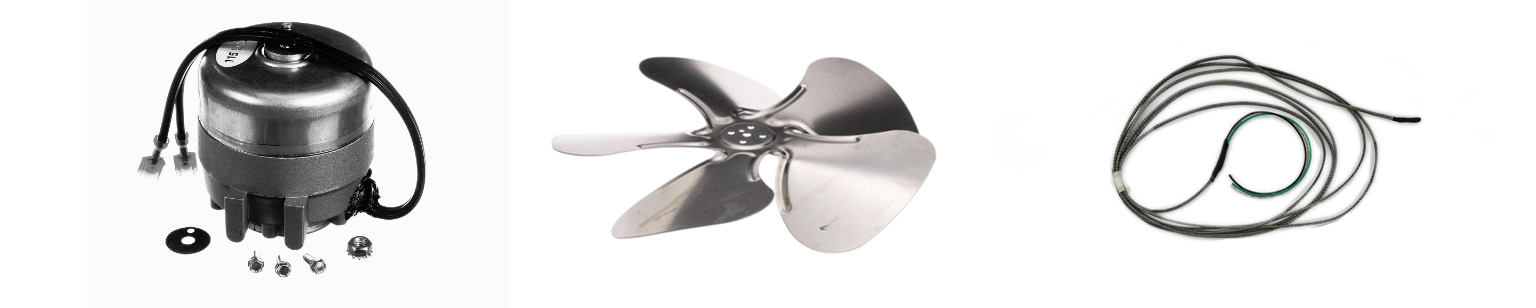
Compressors, controls, refrigerant components, motors, and coils are not “universal parts.” Those must match system specs.
2) Specialty Door Frames and Custom Doors
If your door is:
- oversized
- non-standard thickness
- a specialized glass door
- a custom application
…then compatibility is less predictable, and you’ll want to confirm specs carefully.
3) Heater Wire Systems (in some cases)
Door heater wire exists across many freezers, but routing and wattage requirements can vary. Replacement can be universal in concept—but application details matter.
Why Universal Parts Are a Big Deal (For Real-World Repairs)
Universal compatibility is one of the reasons walk-in repairs are often manageable without waiting forever on a factory part.
Universal parts help you:
✅ avoid long lead times
✅ source parts faster when downtime is costly
✅ avoid getting stuck without an OEM label
✅ keep standard repair items on the shelf
✅ reduce repair cost without sacrificing performance
For busy facilities, the ability to replace worn parts quickly is everything.
How to Make Sure You Order the Right Universal Replacement
Here’s the easiest approach:
1) Identify the function first
What does the part do?
- seal the door
- close the door
- latch the door
- protect the bottom edge
- prevent air loss
2) Measure what matters
Not everything needs a model number.
Helpful details include:
- door width/height
- door thickness
- hinge side orientation
- gasket dimensions/profile
- latch style and strike setup
3) Replace the “pair” when needed
Some parts work best when replaced together:
- latch + strike
- hinge set + alignment
- gasket + sweep (if air leaks are severe)
Final Takeaway: You Usually Don’t Need OEM Parts to Fix a Walk-In Fast
Yes—walk-ins come in many brands and models.
But most of the parts that fail first are common wear components, and a large percentage are universal or cross-compatible when you match basic specs.
The biggest wins are usually simple repairs:
✅ gasket replacement
✅ latch/strike replacement
✅ closer replacement
✅ sweep replacement
✅ strip curtains
If you can measure the door and identify the part style, you can usually get the repair done quickly—without waiting on an OEM-only solution.
And that means less downtime, less frustration, and a walk-in that stays efficient and reliable.